Unofficial Demucs app · Demucs v4 on cloud GPUs
Demucs Online: Split Any Song Into Stems With AI
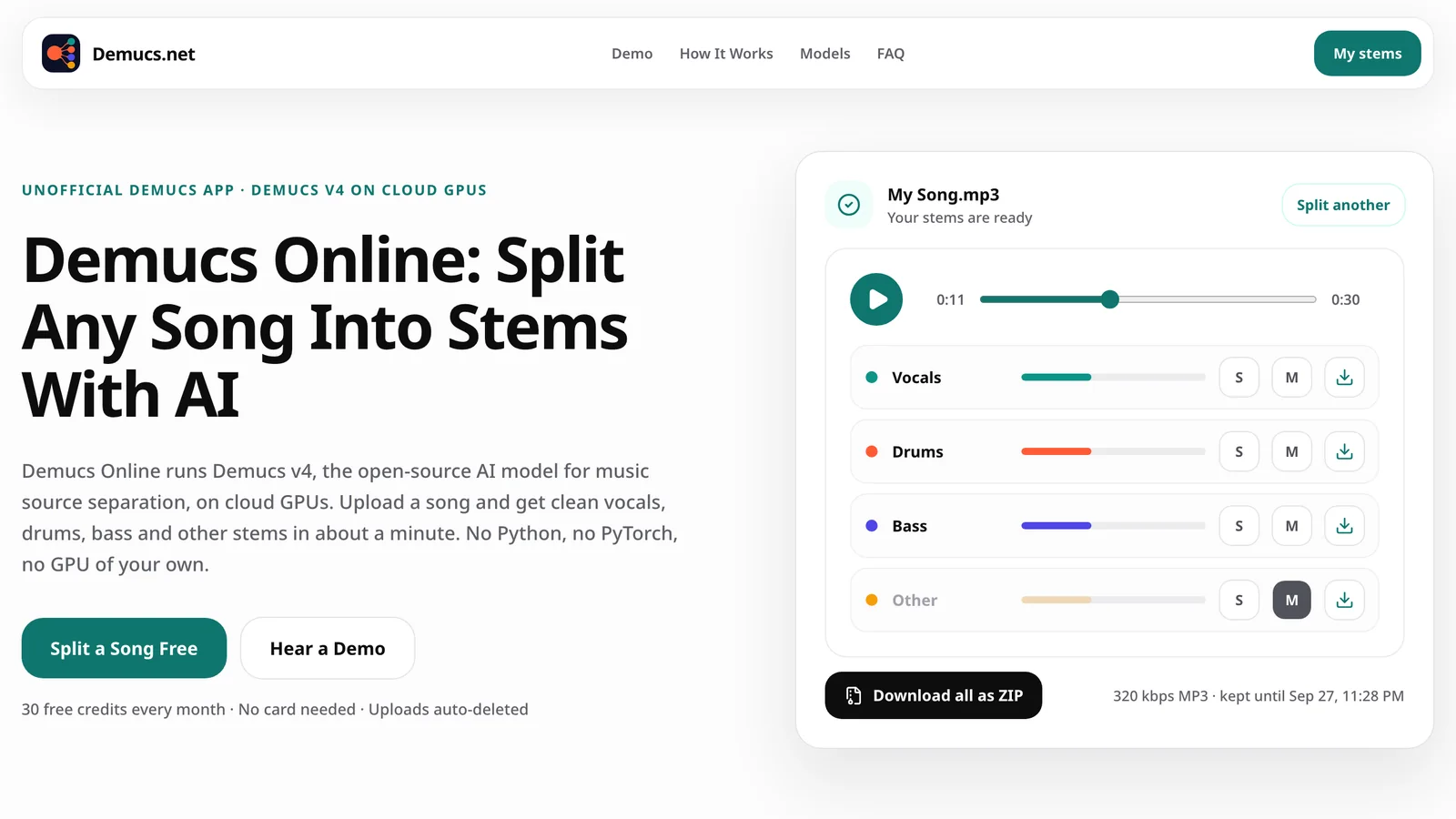
Demucs Online runs Demucs v4, the open-source AI model for music source separation, on cloud GPUs. Upload a song and get clean vocals, drums, bass and other stems in about a minute. No Python, no PyTorch, no GPU of your own.
30 free credits every month · No card needed · Uploads auto-deleted
30 free credits every month · No card needed · Uploads auto-deleted
- 10,000+stars on GitHub
- 9.0 dBSDR on MUSDB18-HQ
- WonSony MDX 2021 (v3)
- MITlicensed open source
Hear Demucs Music Source Separation in Action
This is a real Demucs Online split of a song shared under a Creative Commons license. Play the full mix, then solo the vocals, drums, bass and other stems to hear how cleanly Demucs Online pulls them apart.
- Vocals
- Drums
- Bass
- Other
What Is Demucs?
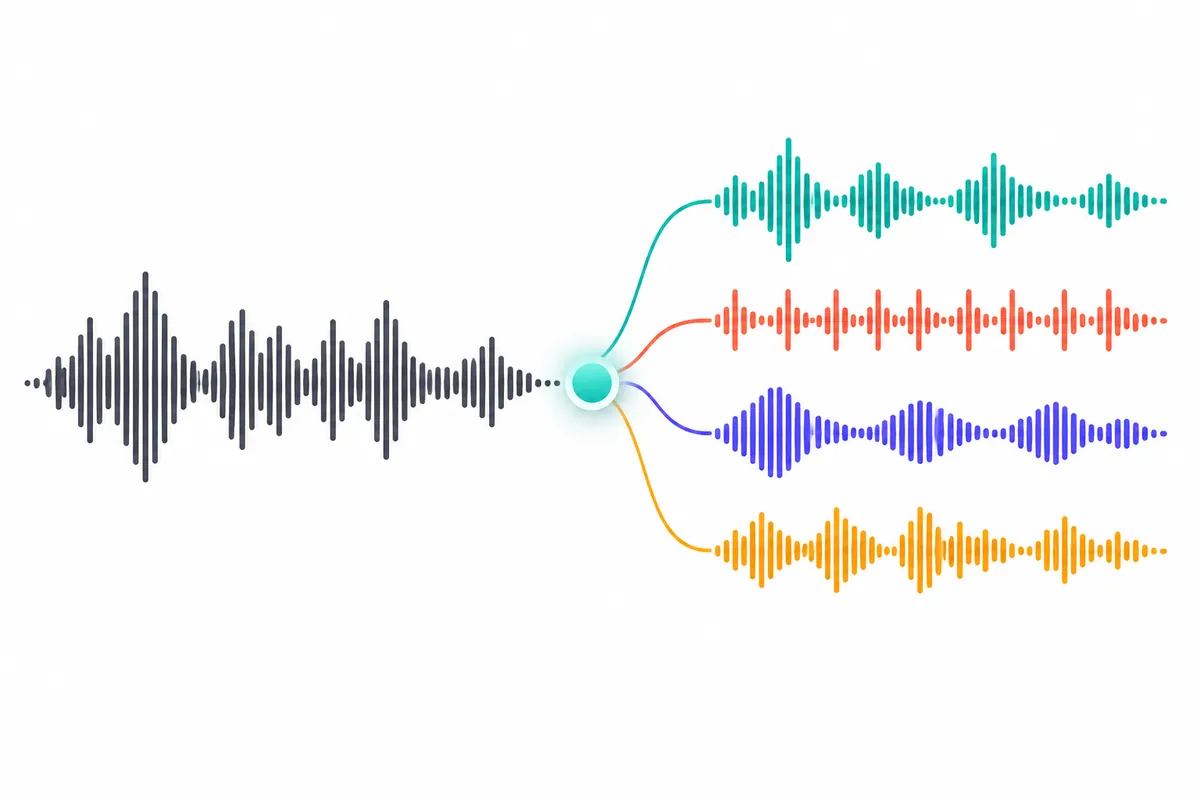
Demucs is an open-source AI model for music source separation, first developed at Meta AI Research. Give it a finished, mixed song and it pulls the mix apart into separate stems: vocals, drums, bass and other, which is everything left over. Demucs v4, the current version, is also called HT Demucs, short for Hybrid Transformer, and it is one of the most widely used open-source models for music source separation.
Demucs v4: The Hybrid Transformer Model
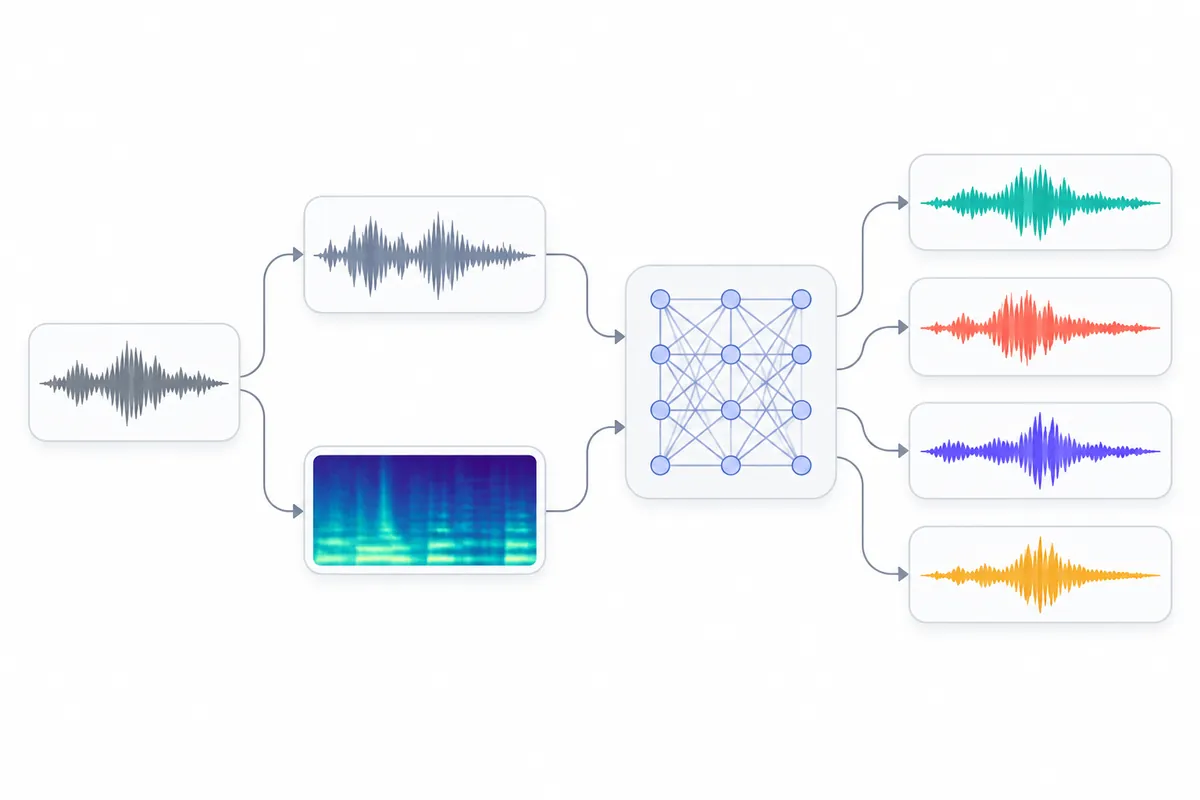
Version 4 reads your song two ways at once, as a raw waveform and as a spectrogram, and a transformer compares the two views. That hybrid design is why it keeps drum hits sharp and vocals natural where older separators smear them. On the MUSDB18-HQ benchmark, the fine-tuned Demucs v4 model scores 9.0 dB of signal-to-distortion ratio, the standard measure of music source separation quality, against 5.9 dB for Spleeter.
The Demucs GitHub Repository
The project is MIT-licensed, and its Demucs GitHub repository has more than 10,000 stars. The original Demucs GitHub project is now archived, and its author keeps a maintained fork at version 4.1. The trained models still work well; Demucs Online simply runs them for you, so there is nothing to clone, compile or configure.
Why Clean Stems Are Harder to Get Than They Should Be
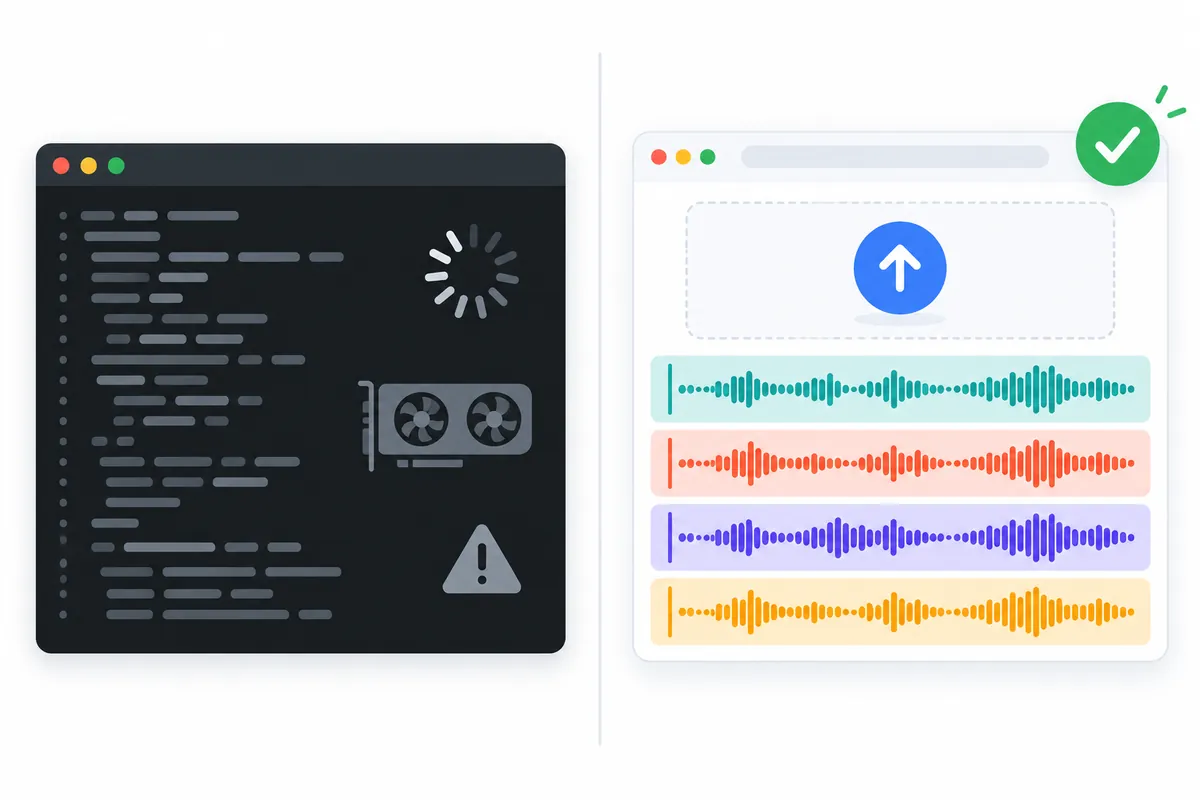
You need an acapella for a remix, an instrumental for karaoke, or just the bass line to learn by ear. Running Demucs AI yourself means installing Python, PyTorch and CUDA, finding a graphics card with about 7 GB of memory, and learning flags like two-stems and shifts. On a laptop CPU, one song can take longer to process than to listen to. Meanwhile, some quick vocal remover sites still use older music source separation models that can leave watery, phasey artifacts.
Demucs Online gives you the real Demucs v4 music source separation model in a browser tab. Same Demucs AI, same quality, none of the setup.
How to Use Demucs Online in 3 Steps
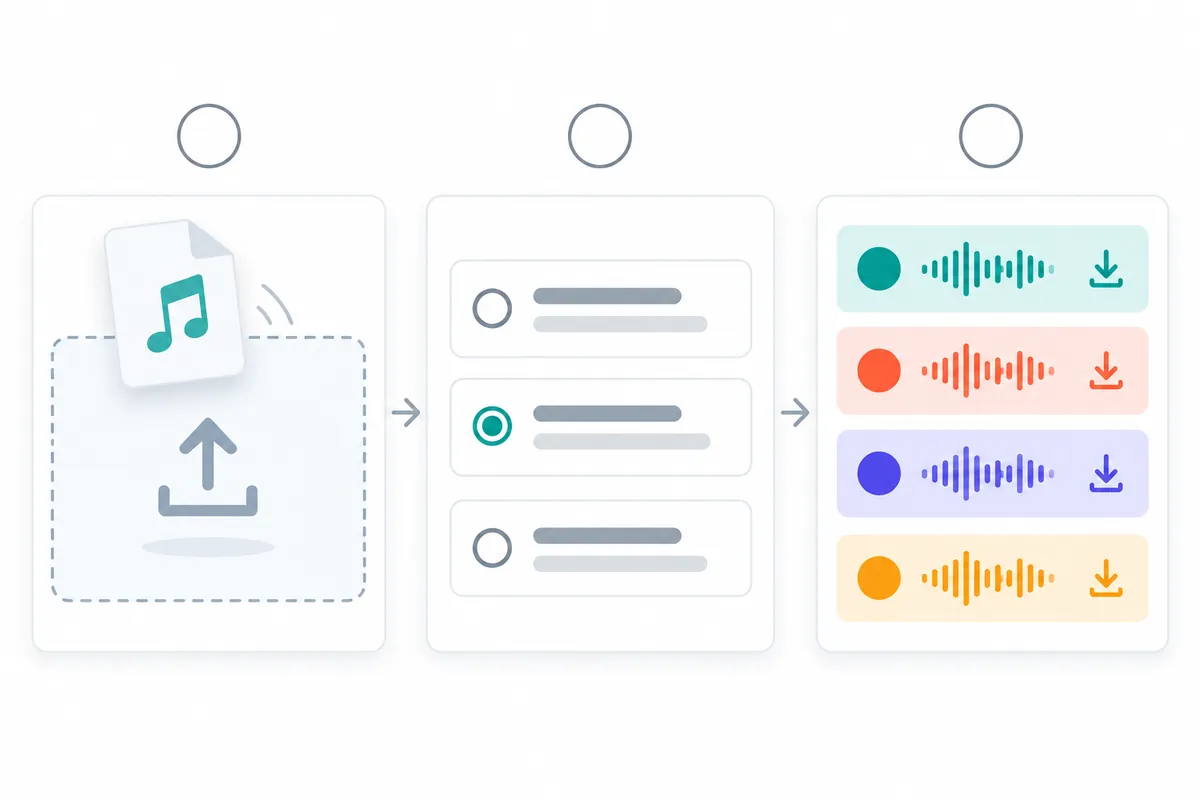
1. Upload Your Song
Drag in an MP3, WAV, FLAC, M4A or OGG file. Demucs Online checks the length and format before anything uploads, so you never wait on a file that would fail.
2. Choose a Demucs AI Model
Pick two stems for vocals and instrumental, four stems for vocals, drums, bass and other, or six stems with guitar and piano. The default model is right for most songs, and Demucs Online selects it for you.
3. Preview Every Stem, Then Download
Solo and mute each stem in the built-in player to check the music source separation before you download. Save stems one by one or as a ZIP of high-quality 320 kbps MP3 files.
What You Can Make With the Demucs App
Music source separation turns one finished mix into parts you can actually work with. Here is what people make with Demucs Online.
Karaoke and Instrumental Tracks
Remove the vocals from any song with a two-stem split and keep a clean instrumental for karaoke nights, covers or practice.
Acapellas for Remixes and DJ Sets
Pull out an isolated vocal that holds up in a mix. The Demucs app keeps breaths and reverb tails that older vocal removers tend to lose.
Drum and Bass Stems for Learning and Sampling
Isolate the drums to transcribe a groove or sample a break, or solo the bass to learn a part by ear.
Music and Dialogue Cleanup for Video
Use music source separation to split a soundtrack from a voice-over, or strip the music out of a clip, before you edit.

Demucs Models Compared: Which One Should You Use?
Demucs Online offers the three v4 models built for music source separation. All three share the same hybrid transformer and trade speed for quality and stem count.
| Model | Stems | Time for a 4-minute song | Best for |
|---|---|---|---|
htdemucs (default) | 2 or 4 | about 20 seconds | Almost every song |
htdemucs_ft (best quality) | 2 or 4 | about 32 seconds | Final mixes and remixes |
htdemucs_6s (six stems) | 6 | about 25 seconds | Guitar and piano parts |
Times were measured on the cloud GPUs Demucs Online uses, in September 2026. The first job after a quiet spell can take up to a minute longer while the model warms up. The six-stem model is the only one with separate guitar and piano stems, though the model's authors note that its piano stem is the weakest.
Demucs Online vs Installing Demucs From GitHub
Both options run the same Demucs music source separation models. The difference is who handles the setup.
| Demucs from GitHub | Demucs Online | |
|---|---|---|
| Setup | Python, PyTorch and CUDA drivers | Nothing, it runs in your browser |
| Hardware | Your own GPU with about 7 GB of memory | Cloud GPUs included |
| Interface | Command line | A visual Demucs GUI with a stem player |
| Cost | Free on your own hardware | Free monthly credits, then pay per minute |
If you live in a terminal and own a strong GPU, the Demucs GitHub version is free and gives you full control. For everyone else, Demucs Online is the quickest way from a song to stems.
Why Musicians Choose Demucs Online
The Real Demucs v4, Not a Lookalike
Many sites say AI vocal remover without naming the model behind it. Demucs Online runs the published v4 weights, so you get the same music source separation model the research describes.
Private by Design
Your uploads are used for music source separation, to make your stems, and nothing else. They are never used for training, never heard by a person, and deleted automatically.
Pay Only for the Minutes You Separate
Every Demucs Online account gets 30 free credits a month once you sign in with Google or confirm your email. After that, one credit covers one minute of audio, and a two-stem split costs less than four.
Demucs Online FAQ
What is Demucs?
Demucs is an open-source AI model for music source separation, first developed at Meta AI Research. It splits a mixed song into vocals, drums, bass and other stems. Demucs v4, the Hybrid Transformer version released in 2022, is the latest.
What is music source separation?
Music source separation is the process of splitting one mixed recording back into its individual parts, such as vocals, drums and bass. AI models like Demucs learn what each instrument sounds like and rebuild it on its own track, which is how Demucs Online turns one song into stems.
Is Demucs online free?
Yes, to start. Every Demucs Online account gets 30 free credits a month once you sign in with Google or confirm your email, which covers about 30 minutes of audio on the default model. No card is needed.
Is Demucs.net the official Demucs app?
No. Demucs.net is an independent site that runs the open-source Demucs models. It is not affiliated with Meta or the Demucs authors. The official project is on GitHub at facebookresearch/demucs.
Is there a Demucs v5?
No. Version 4 is the newest release. The original repository is archived, and the maintained fork is at version 4.1, which is still the v4 model. Anything sold as Demucs v5 is not an official release.
Do I need to download Demucs?
Not with Demucs Online. The model runs in the cloud, so you only upload a song and download the stems. If you prefer to run Demucs locally, you can download it from GitHub or PyPI.
Is there a Demucs GUI?
Yes. Demucs Online is a browser-based Demucs GUI with a built-in stem player. Desktop options such as Demucs-GUI and Ultimate Vocal Remover also exist, but they need installing and work best with a capable GPU.
How long does Demucs online take?
Usually under a minute. A four-minute song takes about 20 seconds on the default model, plus a short warm-up if the service has been idle.
Is Demucs better than Spleeter?
On the standard MUSDB18-HQ benchmark, the fine-tuned v4 model scores 9.0 dB SDR against 5.9 dB for Spleeter, which means noticeably cleaner stems with less bleed between vocals and instruments.
What happens to the songs I upload?
They are processed to create your stems, then Demucs Online deletes them on a fixed schedule: 24 hours on the free plan. Your audio is never used for training or listened to by anyone.
Can I use Demucs stems commercially?
The Demucs code is MIT-licensed, the pretrained weights carry their own dataset terms, and the rights to a recording stay with whoever owns it. Separating a song does not give you new rights to it. See our licensing page for the details.
Try Demucs Online Free
Upload a song and hear what Demucs v4 music source separation can do on Demucs Online. Free credits every month, no card needed.
Split a Song Free